
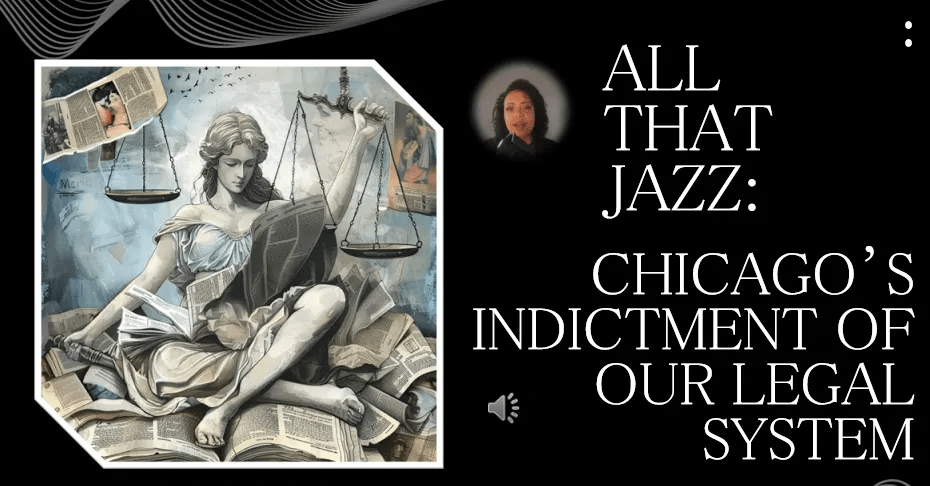
Last summer, I had the opportunity to take one of the most enjoyable classes in U.S. Law School: Law and The Media. In this course, we explored various topics such as the history of law and lawyers in the news, as well as their portrayal in films like A Civil Action and Erin Brockovich (one of my all-time favorite movies), Twelve Angry Men, To Kill a Mockingbird, and documentaries like the 2016 Netflix documentary Amanda Knox. We also looked into television and the law, analyzing shows like Perry Mason (starting with the first episode from 1957, “The Case of the Restless Redhead”), LA Law (the 1986 pilot episode), Law & Order, and more.
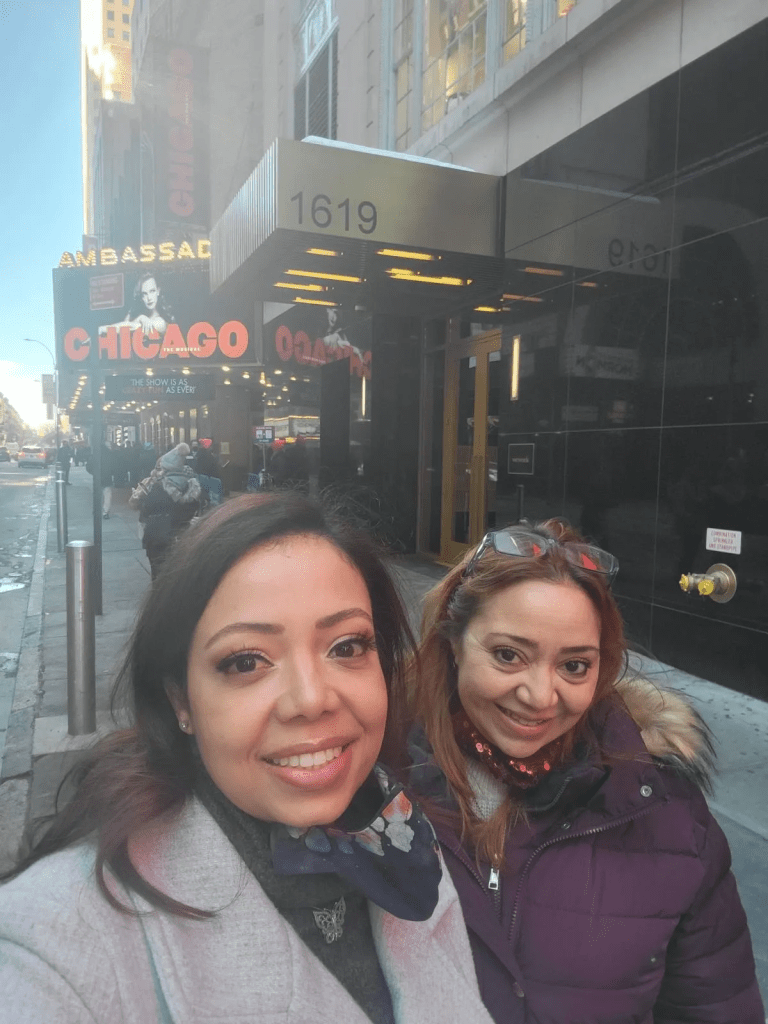
For our final assignment, we were asked to write a paper on a topic chosen from a list provided by the professor. As soon as I saw the title “ALL THAT JAZZ: Chicago’s Indictment of Our Legal System” on the list, I knew that would be my topic, for many reasons. I love art in all its expressions, so musicals are no exception—I admit it, I like musicals. Plus, jazz is one of my favorite music genres. Additionally, “Chicago” is my mother’s favorite musical, and she made us watch it countless times as we were growing up. In fact, in January 2022, I had the pleasure of taking her to see it on Broadway, and then in November of the same year, I went again with my daughter as part of her assignment for her magnet school’s Musical Theater program.
I thoroughly enjoyed all the research for this paper, especially reading about the real cases that inspired it in the book They Both Reached for the Gun: Beulah Annan, Maurine Watkins, and the Trial That Became Chicago by Charles H. Cosgrove. As I read and wrote, I listened to the Chicago movie soundtrack to set the mood. It was absolutely fascinating to work on this project, and that’s why I wanted to share a shorter, adapted version of the paper on my blog for you all.
In this piece, I explore the themes and storytelling techniques in the musical Chicago, examining how they reflect and critique the legal system. The original paper delved into these topics in an academic context, but here, I’ve restructured and simplified the content to make it more accessible for a general audience.
Whether you’re a fan of the musical, interested in legal history, or just curious about how media shapes our perception of justice, I hope you’ll find this exploration insightful. Feel free to share your thoughts —I’d love to hear your take on these enduring themes!
HISTORICAL CONTEXT
The Real-Life Inspirations for “Chicago”
The characters of Roxie Hart and Velma Kelly are based on real women—Beulah Annan and Belva Gaertner—whose sensational murder trials captured the public’s imagination. Annan, known as the “prettiest woman ever accused of murder in Chicago,” shot her lover and managed to escape conviction, thanks in part to her carefully cultivated public image and the skillful manipulation of the press by her defense team.
Popular Opinions About Jury Bias in Favor of Women
During the 1920s, it was widely believed that juries were biased in favor of women, particularly attractive ones. This belief was reinforced by a series of high-profile acquittals that seemed to confirm the notion that “chivalry” influenced jury decisions. Newspapers frequently played up this angle, often ignoring the complexities of each case in favor of a more sensational story.
Racial Bias in Media Reporting
While white female defendants often received sympathetic media coverage, Black defendants faced harsh and biased portrayals, leading to disproportionately severe legal outcomes. This racial bias in media reporting and legal proceedings underscores the systemic inequalities that existed in the criminal justice system of the time.
Appearance and Makeovers in Court
The use of makeovers and carefully crafted appearances to sway jury opinions is a central theme in Chicago. Beulah Annan, for instance, was known for her dramatic courtroom transformations, designed to evoke sympathy and manipulate public perception. This tactic, still relevant today, underscores the superficial aspects of courtroom justice, where appearances can often outweigh facts.
A Play Is Born
Maurine Watkins, a reporter for the Chicago Tribune, penned Chicago based on her experiences covering murder trials. Her play critiques the sensationalism and moral ambiguity of the criminal justice system in the 1920s, presenting a satirical look at how media, celebrity, and corruption intersect in the courtroom.
Differences Between Real Trials and “Chicago”
While “Chicago” captures the essence of the era, it dramatizes and exaggerates certain elements for theatrical effect. In reality, the media’s role in the trials of Annan and Gaertner was more complex and nuanced. The press often reported conflicting information, and the narratives were shaped by the police, prosecutors, and the journalists themselves. The musical simplifies these dynamics, focusing on the most sensational aspects to critique the legal system and the media’s influence on public perception.
THEMES IN “CHICAGO”
- Corruption and Justice
One of the central themes in Chicago is the corruption inherent in the justice system. The musical portrays a legal system where wealth, influence, and media manipulation often determine the outcome of trials, rather than facts or evidence. This is most evident in the character of Billy Flynn, the slick lawyer who knows how to play the system to get his clients acquitted, regardless of their guilt. His motto, “Razzle Dazzle them,” reflects the idea that justice can be bought and sold, and that the truth is secondary to the spectacle of the trial. This theme resonates with audiences because it reflects real-world concerns about the fairness of the legal process and the potential for corruption in high-profile cases.
- The Media’s Role in Shaping Public Perception
The media is another critical theme in Chicago, depicted as a powerful force that can shape public opinion and, by extension, the outcomes of trials. The character of Mary Sunshine, a reporter who is easily manipulated by sensational stories, represents how the press often prioritizes entertainment over factual reporting. The musical shows how the media can turn criminals into celebrities, thereby influencing the public and the jury. This theme is particularly relevant in today’s society, where media coverage can make or break a case before it even goes to trial.
- Fame and Celebrity
Chicago explores the idea that crime can lead to fame, and that society often glorifies criminals if they are attractive or charismatic enough. Roxie Hart’s transformation from an ordinary woman to a media darling highlights how the public’s fascination with crime and scandal can turn wrongdoers into celebrities. The musical suggests that this obsession with fame can undermine the seriousness of the justice system, turning it into another form of entertainment. This theme is a biting commentary on how modern society often values fame and notoriety over integrity and justice.
- Gender and Power
The musical also delves into the theme of gender and how it intersects with power. In the world of Chicago, women like Roxie and Velma use their femininity to manipulate those around them, particularly the men in power, to achieve their goals. The portrayal of these female characters reflects the double standards in society, where women are often judged by their looks and ability to conform to gender expectations. However, it also shows how these women reclaim power in a male-dominated world by turning societal expectations to their advantage. This theme invites the audience to reflect on the complex dynamics of gender, power, and manipulation.
- The Illusion of Justice
Finally, Chicago presents the idea that justice is often an illusion, shaped by those with the power to control the narrative. The courtroom in the musical is less about finding the truth and more about who can put on the best show. This theme is encapsulated in the character of Billy Flynn, who views the legal process as a game to be won rather than a search for justice. The musical suggests that the legal system, much like the world of show business, is full of illusions where the line between right and wrong is blurred by performance and deception.
MODERN LEGAL SYSTEM COMPARISONS
- High-Profile Cases and Media Influence
The themes presented in Chicago resonate with modern high-profile cases, such as the trials of O.J. Simpson and Amanda Knox, where media coverage played a pivotal role in shaping public perception and, ultimately, the trial outcomes. These cases highlight the ongoing tension between the judicial process and the court of public opinion.
- Media Sensationalism Today
Today’s media continues to sensationalize trials, often at the expense of a fair judicial process. The tactics used in Chicago remain a potent reminder of the dangers of a media-driven legal system, where the pursuit of truth can be overshadowed by the desire for headlines.
- Public Perception and Legal Outcomes
Public opinion, shaped by media narratives, can significantly influence legal outcomes. This ongoing issue demonstrates the enduring relevance of the critiques presented in Chicago, where the line between justice and entertainment is often blurred.
THE ROLE OF STORYTELLING IN LEGAL NARRATIVES
Key Elements of Storytelling
Jonathan Shapiro’s book, Lawyers, Liars, and the Art of Storytelling, emphasizes the importance of storytelling in the legal profession. According to Shapiro, storytelling applies to everything a lawyer does—from crafting a compelling narrative in court to explaining complex legal concepts to clients. The key elements of effective storytelling include ethos (credibility), logos (logic), and pathos (emotion). These elements help lawyers connect with their audience, whether it’s a judge, jury, or client.
Application in Legal Storytelling
In the legal world, storytelling is a critical skill. Lawyers must be able to craft a narrative that resonates with the jury, using the elements of ethos, logos, and pathos to make their case compelling. In Chicago, we see this in action as Billy Flynn crafts stories for Roxie and Velma that portray them in the best possible light, regardless of the truth.
TECHNIQUES OF STORYTELLING IN “CHICAGO”
Use of Vaudeville and Satire to Critique the Legal System: Chicago uses vaudeville—a theatrical variety show—and satire to critique the legal system. The musical numbers are presented as exaggerated performances, highlighting the idea that the legal process is more about putting on a good show than about finding justice. This approach allows the audience to see the absurdity of a system where entertainment value can outweigh the truth.
- The Song “We Both Reached for the Gun”: In this song, Billy Flynn acts as a ventriloquist, controlling Roxie Hart as she speaks to the press. This scene is a powerful critique of how easily the truth can be manipulated by those with the right skills. The song highlights the theme of media manipulation, showing how lawyers and the press work together to create a narrative that benefits their interests, rather than seeking justice.
- The Impact of Dramatic Storytelling on Audience Perception: Dramatic storytelling has a profound impact on how audiences perceive the legal system. In Chicago, the use of catchy songs, exaggerated characters, and dramatic scenes makes the critique of the legal system more engaging and memorable. This not only entertains the audience but also prompts them to think critically about the flaws in the system.
STORYTELLING TECHNIQUES IN MODERN MEDIA
- Comparison of Storytelling Methods Used in “Chicago” with Those in Contemporary Media: The storytelling techniques used in Chicago are still prevalent in modern media. Both rely on dramatization, emotional appeals, and sensationalism to captivate audiences. For example, TV shows like Law & Order often dramatize legal cases to make them more engaging, just as Chicago does with its musical numbers. The media’s focus on the most sensational aspects of a case can also distort the public’s perception, just as the musical shows how public opinion can be swayed by a well-crafted story.
- The Role of Narrative in Shaping Public Opinion About Legal Cases: The narrative presented by the media plays a crucial role in shaping public opinion about legal cases. How a case is framed can influence how the public views the defendants, the victims, and the legal system as a whole. In Chicago, we see how the media’s portrayal of Roxie and Velma influences their trials, just as modern media can influence real-life legal outcomes.
- Framing the Narrative: The way a story is framed can significantly affect public perception. Media outlets choose which details to emphasize and how to present them, creating a narrative that can influence public opinion. For example, focusing on a defendant’s background and personal history can humanize them and generate sympathy, while highlighting their alleged crimes can create a negative perception.
- Creating Heroes and Villains: Media narratives often simplify complex legal cases by creating clear heroes and villains. This binary approach makes the story more engaging but can also distort the reality of the situation. In Chicago, characters like Billy Flynn and Roxie Hart are portrayed in ways that highlight their charm and cunning, making them memorable and engaging figures.
- Impact on Jury Decisions: The media’s portrayal of a case can influence potential jurors, who may be exposed to biased narratives before the trial begins. This pre-trial publicity can create preconceived notions that affect their impartiality. In high-profile cases, the media’s influence on public opinion can be so strong that it becomes difficult to find an unbiased jury.
Conclusion
- Recap of How “Chicago” Reflects Ongoing Issues in the Modern Legal System: Chicago remains a powerful critique of the legal system, highlighting themes that continue to resonate in today’s society. Through its use of vaudeville and satire, the musical exposes the manipulation and corruption that can pervade legal proceedings. By drawing parallels between the trials of Roxie Hart and Velma Kelly and contemporary high-profile cases like those of O.J. Simpson and Amanda Knox, we see how media influence and the creation of celebrity defendants are persistent issues.
- The Persistent Themes of Corruption, Media Influence, and Celebrity Status: The themes of corruption, media influence, and celebrity status are central to Chicago and remain relevant today. The character of Billy Flynn illustrates how legal outcomes can be swayed by charm and media manipulation, a tactic still seen in modern legal strategies. The song “We Both Reached for the Gun” exemplifies how attorneys manage the press to shape public narratives, a practice that continues to impact high-profile trials. Additionally, the media’s role in transforming defendants into celebrities, as seen in the trials of O.J. Simpson and Amanda Knox, underscores the ongoing fascination with crime and celebrity in the legal system.
Final Thoughts
- The Importance of Critically Examining How Justice is Portrayed in Media: Critically examining how justice is portrayed in media is crucial for understanding the biases and influences that shape public perception and legal outcomes. Media coverage can dramatize and sensationalize legal cases, affecting how society views the justice system and the individuals involved. By recognizing these influences, we can better appreciate the complexities of legal proceedings and the importance of fair and unbiased reporting.
- The Need for Balanced and Responsible Reporting to Ensure Fairness in the Legal System: Balanced and responsible reporting is essential for ensuring fairness in the legal system. Media outlets must strive to present accurate and comprehensive accounts of legal cases, avoiding sensationalism and bias. This approach helps maintain the integrity of the judicial process and ensures that public opinion is based on facts rather than distorted narratives. Legal professionals and media practitioners must work together to promote ethical standards in reporting, safeguarding the principles of justice.
“Chicago” serves as a timeless indictment of the legal system, highlighting the ongoing issues of corruption, media influence, and celebrity status. Despite being set in the 1920s, the musical’s themes are remarkably relevant to contemporary legal challenges, emphasizing the need for vigilance and reform in how justice is portrayed and administered.
By examining the intersection of law and media through the lens of Chicago, we gain valuable insights into the power of storytelling in shaping public perception and influencing the legal process. As both legal professionals and media consumers, we must remain vigilant in our pursuit of truth and fairness in the representation of justice.
Lissie Albornoz
—-
The content provided in this blog post is for informational and educational purposes only. It does not constitute legal advice or create an attorney-client relationship. The views and opinions expressed are those of the author and do not necessarily reflect the official policy or position of any legal institution or organization. Readers should not act or rely on any information in this blog without seeking the advice of a qualified legal professional.

 The LAW Way
Leave a comment