Intro: Before continuing, I want to clarify that this response is based entirely on my personal experiences. It does not pretend to be an academic analysis, nor does it rely on formal citations. If some choose to call it a fallacy, so be it—but this is my perspective.
I never imagined that a blog post written by someone who has never visited Venezuela could shake me so deeply. But Ricky Marc’s “Sin Nico” (Spanish) or “Venezuela” (English) did just that. It inspired me to respond—not only as a Venezuelan in exile, but as someone who lived through the darkest days of my country’s descent into repression and chaos. This post is more than a reply; it’s a testimony of memory, pain, and the urgent need for truth.
Dear Ricky,
Your text moved me deeply. I read it with tears in my eyes, not only because of its clarity, but because it shows an enormous sensitivity toward the tragedy my country has lived through. Knowing that someone who has never set foot in Venezuela, who doesn’t speak Spanish fluently, has managed to capture with such clarity the historical, political, and human drama Venezuela is going through… left me speechless.
Your analysis is balanced, respectful, and brave. And I agree with much of what you say, especially when pointing out that the original Chavismo is not what Maduro represents today. I also share your rejection of both internal authoritarianism and foreign interventionism. That duality — which is so often oversimplified in the media — is crucial.
However, from my personal experience, there is a part of the story I feel is important to add to your reflection.
April 11 in First Person
That fateful day in 2002, I was protesting alongside a group of university classmates. There were 11 of us. We were on the streets exercising our civic right when we were guided into what later turned out to be an ambush. From the rooftops of buildings near the Puente Carmelitas, and on the bridge itself, snipers opened fire on us.
I ran for my life through clouds of tear gas, with the sound of gunfire in the background and people falling around me. One of my best friends was paralyzed by a panic attack and I stayed with her, helping her as best I could. It took hours before we knew whether the others were alive. One by one they arrived at my home, each with a story more terrifying than the last. We all survived. But we were no longer the same.
That day ended with the suspension of constitutional guarantees, brutal repression, and arbitrary detentions. It was a black day in our history.
Later, Chávez claimed that the snipers were from the opposition. A Machiavellian move meant to sow confusion and further divide the people. The truth was buried in propaganda, as so many times before.
In the days that followed, Chávez returned to power—stronger. What followed was a media crackdown. He expanded state-run outlets and pushed through restrictive media laws to silence dissent. Many of those involved in the coup, went into exile.
But the scars remained. The April 11 events deepened the polarization in our country and marked a definitive turn toward authoritarianism. For those of us who were there, the memory is seared into our hearts. We remember—not just the violence—but the betrayal, the manipulation, and the day we stopped believing in the system.
Chávez Was No Martyr, and the Opposition Is No Salvation
Your analysis of Chávez’s legacy may seem fair for some. And I recognize — like you — that his arrival awakened legitimate hopes in a country that had historically ignored the poor. Social missions like Barrio Adentro responded to real needs. And it is true that, for years, the forgotten felt seen.
But it is also true that under his government there was political persecution, censorship, repression of dissent (even from the left), human rights violations, the loss of constitutional order and the rule of law, and a dangerous alliance with the Castros, which — in my view, among other things — ended up devouring the soul of our republic.
And here I want to add something that is rarely mentioned in these analyses: Cuba attempted to invade Venezuela militarily in the 1960s, through a failed operation known as Machurucuto. That attempt was repelled. But decades later, Fidel Castro found in Hugo Chávez the perfect opportunity to achieve what he couldn’t before with weapons: take control of the country from within, without firing a single shot.
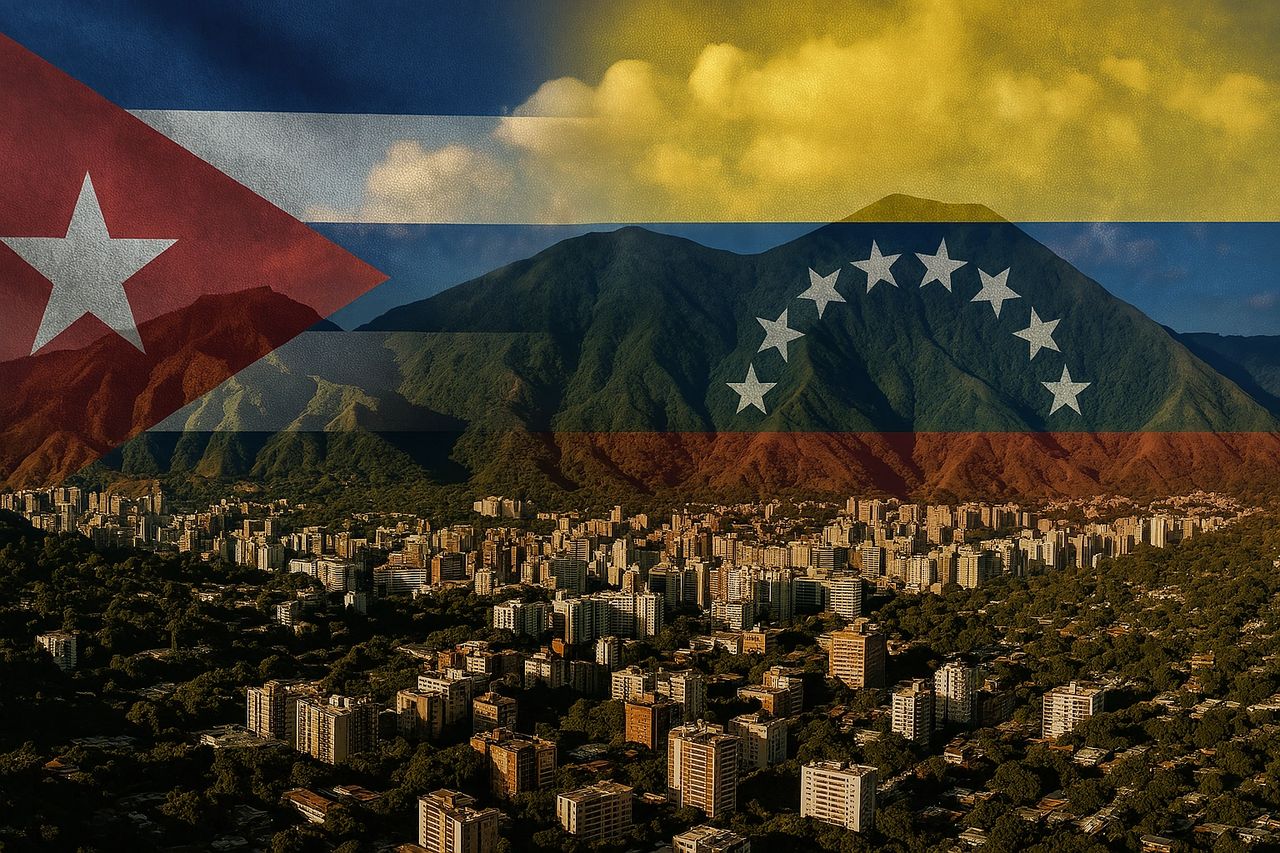
Chávez, young and charismatic, filled with Bolivarian ideals and deeply enamored with the romantic revolutionary narrative of Cuba, became the ideal vehicle. That’s how the Cuban “doctors” arrived with Barrio Adentro, many of whom were in fact G2 agents. They lived among us, in our communities, infiltrating every space of the Venezuelan social fabric. It was the beginning of a silent yet effective colonization.
It’s important to note, however, that Barrio Adentro was not only a vehicle for infiltration by Cuban G2 agents—it also became, paradoxically, a lifeline for many real Cuban doctors. Trapped under the strict control of the Castro regime, many saw their deployment to Venezuela as their only chance to escape. Though heavily surveilled by Cuban intelligence and subject to strict limitations on their movement, some managed to flee and seek asylum abroad. For them, Barrio Adentro was both a cage and a door.
Hatred between social classes was sown, the discourse was radicalized, and a network of surveillance and indoctrination was installed. Cuba governed from the shadows, and Chávez — even with his own ideas and personality — became its puppet to a certain extent. It’s public knowledge that during his government, corruption deepened like never before. Billions of dollars were embezzled at all levels of the State, and impunity became the norm. Oil became loot, not a lever for development. The revolutionary discourse served as a façade to enrich a new political elite directly connected to power.
Some allege that when he no longer served the interests of the Castros, he was eliminated. There is no official evidence, but at the time, information was leaked suggesting that he died in December 2012 in Cuba, not in March 2013 as was announced. (See El Gran Engaño by Pablo Medina). In 2018, former Attorney General Luisa Ortega Díaz revealed in an interview that Diosdado Cabello himself called her on December 28, 2012 to inform her of Chávez’s death — only to call again later to walk it back. She has also publicly stated that she was never shown a death certificate, and expressed doubts about whether it was truly Chávez’s body displayed in the public funeral. Everything, as many believe, was managed in total secrecy from Havana — a calculated move to keep control of the transition and avoid constitutional procedures that would have jeopardized Maduro’s rise to power.
Today, people say that Maduro does not govern. Diosdado does. And what we have is a narco-dictatorship fully subordinated to Cuba’s interests.
Recent journalistic investigations, such as the one published by the New York Times and later echoed by InSight Crime here, have exposed how many of these so-called doctors participated in coordinated extortion tactics. Patients with chronic conditions were threatened: vote for Maduro or be denied life-saving treatment. According to testimonies from former Cuban medical personnel who escaped Venezuela, even oxygen was weaponized during elections. Some were ordered to prioritize care for criminal gangs and paramilitary groups over civilians. These acts reflect a disturbing criminal alliance between the Maduro regime and the Cuban state, in which healthcare became a tool of coercion, surveillance, and social control.
What Venezuela Really Needs
It’s very hard for me to believe in genuine opposition leaders. Many of them have been complicit, have made deals, have played their role in this grand theater. As you said: this is not a besieged revolution, it is a counterrevolution dressed in red. And I would add: the opposition has not truly stood by the people either.
What Venezuela needs is a radical political re-foundation, a reconstruction from the bottom up, where the people once again have a voice — without strongmen, without foreign tutelage, and without false simulations of democracy.
Of course, that is not easy. We are talking about decades of indoctrination and psychological manipulation. At this point, Venezuelan society has been deeply eroded at its very foundations. There is no respect for values or principles — but how could there be, when there is no respect for institutions? Doctrines have been implanted that glorify mediocrity and normalize life outside the law, where everyone does as they please and any “government” response is selective and aligned only with its own interests. Not to mention the multidimensional poverty due to economic precarity and poor public services, the brutal repression, arbitrary arrests, torture, human rights violations, an almost non-existent healthcare system — and what little does exist is only available to those who can afford it.
All of this has silenced the voice of a people who are, at their core, noble, hardworking, and honest — and who today long for real change.
Your article is an honest call for that awakening. My response is a testimony to what that struggle has cost us — to those of us who left, and to those who stayed.
Thank you for using your voice to speak for those who often cannot.
With respect and deep admiration,
Lissie Albornoz


Leave a Reply